California ADU Law
SB 9 Lot Splits in California: How They Work With ADUs

California Senate Bill 9 (SB 9, Chapter 162, Statutes of 2021), in effect since January 2022, lets owners of qualifying single-family lots split the lot into two parcels and build up to two housing units on each parcel, so one single-family lot can become as many as four homes. The lot split rules live in Government Code section 66411.7, and the two-unit rules in Government Code section 65852.21. Together with California’s ADU law, it is a big change for single-family neighborhoods, and it comes with more conditions than most homeowners expect.
For the families we talk with, SB 9 usually comes up in one of two ways: (1) splitting a larger lot into two parcels so two generations can each own a home side by side, or (2) adding more homes to one property for family or long-term rental income. Both can work under SB 9, and both involve more permitting and title work than a typical single ADU.
The short version: SB 9 allows a qualifying single-family lot to be split into two parcels, with up to two units on each. Key conditions: each new parcel is generally at least 1,200 sq ft, neither parcel can be smaller than 40% of the original lot, you sign an affidavit that you intend to live in one of the units for at least 3 years, and the lot cannot be in a historic district or other excluded area. How each city applies it varies, and it is confirmed for your address in the feasibility study.
On this page
What SB 9 actually authorizes
SB 9 added two distinct rights for California single-family lot owners.
1. Urban lot splits
Under section 66411.7, a city or county must approve a parcel map dividing a single-family lot into two parcels, without discretionary review, when the split meets these requirements:
- Minimum lot size: Each new parcel must be at least 1,200 sq ft, unless the city has adopted a smaller minimum by ordinance.
- Roughly equal parcels: The two parcels should be about the same size, and neither can be smaller than 40% of the original lot.
- Owner-occupancy affidavit: You must sign an affidavit that you intend to live in one of the units as your principal residence for at least 3 years from approval. (Qualified community land trusts and nonprofits are exempt.)
- One split only: A parcel created by an SB 9 split cannot be split again, and you cannot use SB 9 if you (or anyone acting with you) already split an adjacent parcel under it.
- Zoning and location: The lot must be in a single-family residential zone, and sit in a city that includes part of a Census urbanized area or urban cluster, or for unincorporated land, wholly inside one.
- Long-term rentals only: Any unit created through a split must be rented for terms longer than 30 days.
The city must approve or deny a complete application within 60 days. It can deny a split that meets the rules only if its building official makes a written finding of a specific, adverse impact on public health and safety that cannot be mitigated.
2. Two-unit residential construction
Under section 65852.21, an owner in a single-family zone can build up to two housing units on a lot, either by adding a unit to an existing home or by building two new ones:
- This applies to the original lot or to each parcel of a split lot.
- Combined with a split, that means up to 4 units on what was one lot. After a split, a city does not have to allow more than two units on either parcel, counting any ADU or JADU.
- A city cannot apply standards that would prevent two units on each parcel or make a unit smaller than 800 square feet.
- Setbacks: a city may require up to 4 feet from the side and rear lot lines, and none for an existing structure or one rebuilt in the same footprint.
The math: how many units can my lot support?
Say you own a typical 8,000 sq ft single-family lot in California:
- Without SB 9 or ADU law: 1 single-family home.
- With ADU law (no SB 9): 1 primary home + 1 detached ADU + 1 JADU = 3 units.
- With SB 9 + ADU: Split into two roughly 4,000 sq ft parcels. Each parcel: 1 primary home + 1 ADU = 2 units. Total: 4 units.
That is up to four homes on what was one single-family lot. Whether your lot can actually fit that layout depends on its shape, access, utilities and your city’s objective standards.
Where SB 9 doesn’t apply
SB 9 has real exclusions, and a lot can be zoned single-family and still not qualify.
The major exclusions:
- Historic properties. Lots that are state or local historic landmarks are excluded, and a split cannot require demolishing or altering a contributing structure in a designated historic district.
- Coastal Zone properties. SB 9 does not override the California Coastal Act, so a coastal development permit may still be required, though the city cannot require a public hearing for it.
- Hazard and resource areas. Lots in very high fire hazard severity zones (with limited exceptions), certain flood and earthquake fault zones, wetlands, prime farmland and other protected areas may be excluded, depending on the specific site.
- Properties already split under SB 9. A parcel created by a previous SB 9 split cannot be split again.
- Existing tenants and protected housing. A split cannot require demolishing or altering housing that is rent-restricted, under rent control, taken off the rental market in the last 15 years, or occupied by any tenant in the last 3 years.
Our feasibility study checks SB 9 eligibility for your specific lot. It is one of the most common questions we get from families exploring more than one home on a property.
How cities apply SB 9
State law is the floor. A city must approve a split that meets the rules, but it can apply:
- Objective zoning, subdivision and design standards, meaning measurable rules like setbacks, height or materials, as long as they do not block two units per parcel or push a unit below 800 square feet.
- Certain conditions, such as easements for utilities, access to the public right-of-way, and in some locations off-street parking of up to one space per unit.
How each city applies SB 9 varies, and it is confirmed for your address in the feasibility study.
The cost of an SB 9 lot split
Survey, parcel map, city fees, title and recording costs vary by parcel and city, and we confirm them in the feasibility study. These costs sit on top of whatever you build on each parcel.
When SB 9 makes sense
A few situations where SB 9 tends to come up:
1. Multi-generational family arrangements
Parents own a larger lot. An adult child wants to own a home nearby but cannot find land they can afford. The parents split the lot under SB 9, a home goes on the new parcel, and the parents stay in the original house. End state: two parcels, two households next door to each other, each owned independently.
If your lot does not qualify for a split, some places offer a different route to separate ownership. Where a city or county has opted in under AB 1033, the main house and an ADU can become separate condominiums without dividing the land into two parcels. Our guide on whether you can sell an ADU separately in California covers the conditions and how to check your city.
2. Adding long-term rental homes
An owner splits the lot and builds additional units to rent long term. Because the applicant signs a 3-year owner-occupancy affidavit, this fits an owner who plans to live in one of the units, and every unit created through the split must be rented for more than 30 days. The build cost, split costs and expected rents all have to work for your situation, so we lay them out in the feasibility study.
3. Downsizing without moving away
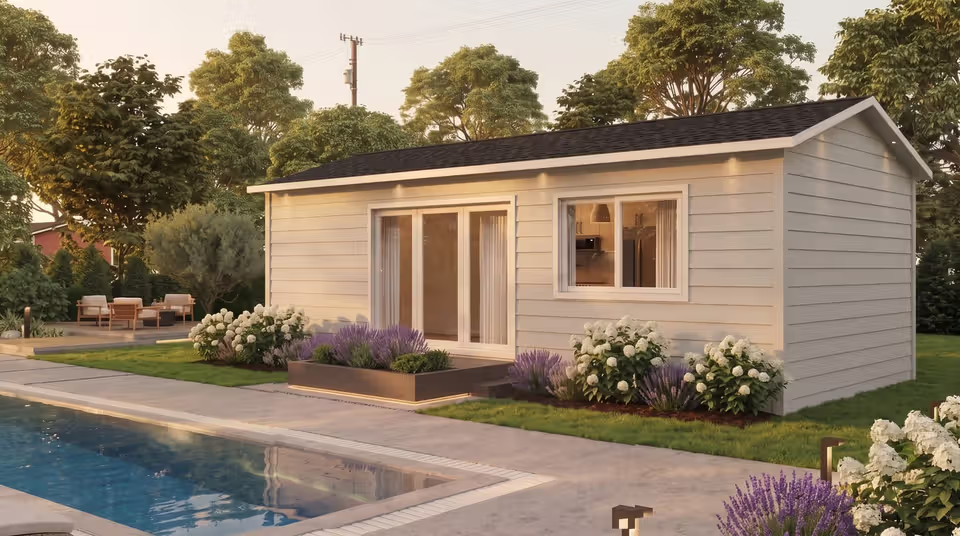
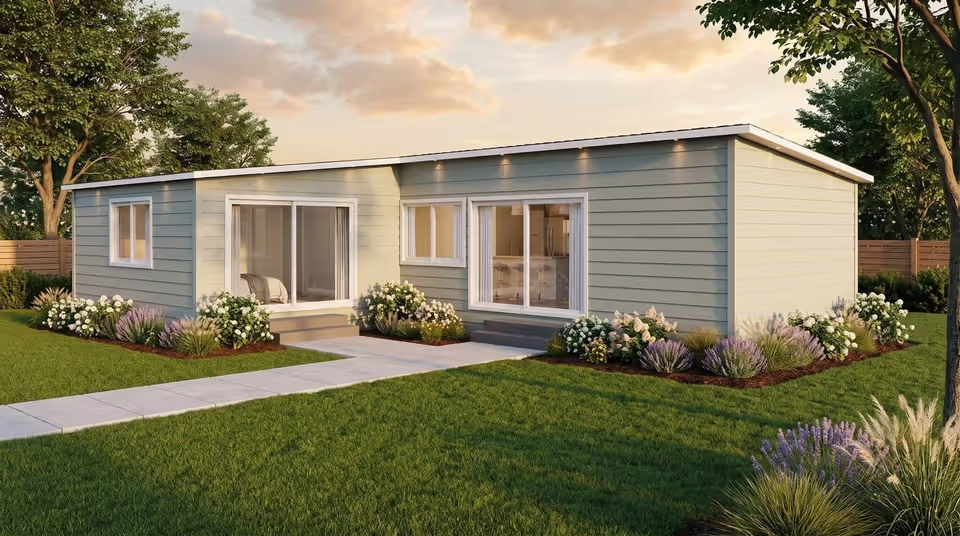
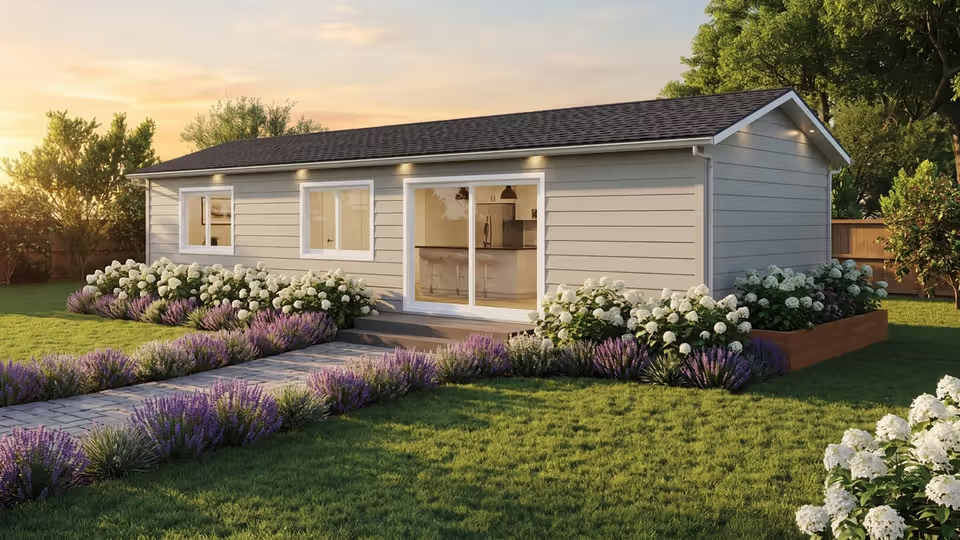
A couple owns a large lot with a big house. They want to downsize but stay in the neighborhood. With an SB 9 split, they can build a smaller home on the new parcel, such as one of our 945 to 1,200 sq ft models, and sell the original house on its own parcel.
How SB 9 pairs with our process
For SB 9 projects, our process looks like a standard ADU build with extra steps at the front:
- Property analysis checks SB 9 eligibility (zoning, lot dimensions, exclusions).
- The feasibility study covers the lot split, unit layout and city permits. ($497 standard or $997 for an empty lot, refundable minus payment processing fees only if your property cannot host an ADU, and credited toward your build if you sign within 90 days.)
- Lot split application and parcel map are filed alongside construction planning. (City review: 60 days under state law once the application is complete.)
- Construction permits are issued per parcel. Each unit goes through standard ADU or primary home permitting.
- Site work happens on each parcel while our factory builds the homes, then the units are delivered and installed.
Total timeline depends on the split approval and permitting, which we confirm in the feasibility study.
What we tell families
SB 9 is a real tool that can create real homes on California single-family lots. It is also more involved than most headlines suggest. Not every single-family lot qualifies, cities apply the law differently, and a split adds survey, map and title work before construction starts.
If you are seriously exploring an SB 9 project, the right first step is a feasibility study. Our team will check eligibility, identify how your city applies SB 9, and lay out the full picture, including the lot split, permits and construction.
Also see our guide to multi-family ADU configurations for options that do not split the lot, or use the ADU calculator to estimate a project with any of our 14 models.