
ADU Questions · 2026
ADU Maintenance Guide: Caring for a Factory-Built Home
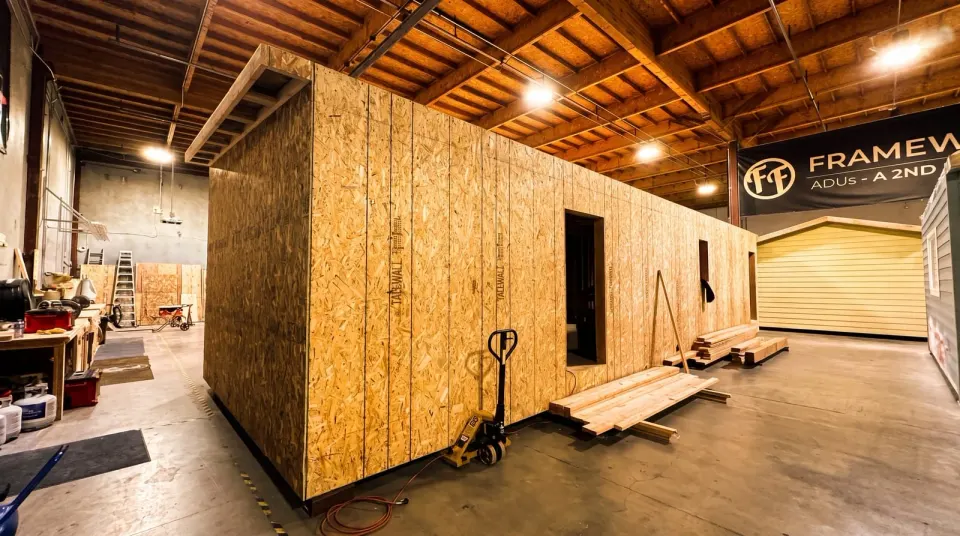
A factory-built ADU generally trades high-maintenance materials for low-maintenance ones, mini-split heat pumps instead of ducted furnaces, fiber-cement siding instead of wood, composite decking instead of stained lumber, and that swap pays off in how little upkeep the home actually needs. That said, “low maintenance” isn’t “no maintenance.” A handful of simple, mostly seasonal tasks keep these systems running the way they’re supposed to and catch small issues before they turn into expensive ones.
The short version: Clean mini-split filters every one to three months, rinse fiber-cement siding and composite decking a couple times a year with no staining or sealing required, check gutters each fall, and flush or inspect your water heater annually. None of it is difficult. Most of it takes less time than mowing the lawn.
Mini-split HVAC: filter cleaning is most of the maintenance
If your home is heated and cooled by a mini-split system, the single most important thing you can do for it is keep the filters clean. Mini-splits pull room air across a filter before conditioning it, and a dirty filter makes the unit work harder to move the same amount of air, which shows up as higher energy use and, eventually, reduced heating or cooling performance.
- Clean the indoor unit’s filters every one to three months, more often if you have pets, run the system heavily, or live somewhere dusty. Most filters simply slide out, rinse clean with water, and air dry before going back in, no tools required.
- Wipe down the indoor unit’s exterior and vents occasionally to keep dust from building up around the intake.
- Keep the outdoor condenser unit clear of leaves, debris, and anything that restricts airflow around it, and give it a couple feet of clearance from plantings or stored items.
- Have the system professionally serviced roughly once a year, mainly to check refrigerant levels and clean components you can’t easily reach yourself.
Because a mini-split has no ductwork, you also skip an entire category of maintenance that ducted systems require, there’s no duct cleaning, no leaky duct joints losing conditioned air in a crawlspace, and no duct-borne dust circulating through the house.
James Hardie fiber-cement siding: about as low-maintenance as siding gets
Fiber-cement lap siding, the kind made by James Hardie, is one of the more genuinely low-maintenance exterior materials available, and it’s worth being honest about why: unlike wood siding, it doesn’t rot, warp, or attract termites, and it holds paint far longer than wood does because it doesn’t expand and contract with moisture the same way. That’s a real, practical advantage over traditional wood siding, not just a marketing point.
- Rinse it down once or twice a year with a garden hose and a soft brush if needed, to clear dust, pollen, and light grime. A pressure washer can be used but keep it on a low setting and avoid aiming directly at seams.
- Check caulking at joints, windows, and trim annually, and recaulk if you see cracking or gaps, since caulking (not the siding itself) is usually the first thing to wear.
- Repaint on a much longer cycle than wood siding needs, typically well over a decade under normal conditions, since fiber-cement holds a paint finish far longer than wood.
- Look for any impact damage after a storm or falling branch. Fiber-cement resists rot and pests well, but a hard enough impact can still crack or chip it, and a damaged section is straightforward to replace.
Trex composite decking: rinse it, don’t stain or seal it
Composite decking made by Trex is designed specifically to skip the maintenance cycle that wood decks require. There’s no staining, no sealing, and no annual refinishing needed, which is a meaningful time and cost difference over the life of the deck compared to a traditional wood deck.
- Sweep off leaves and debris regularly, especially in shaded areas or under furniture, so organic material doesn’t sit on the boards and trap moisture.
- Wash it a couple times a year with soap and water and a soft-bristle broom or brush. Composite decking resists staining much better than wood, but grease, tannins from leaves, and pollen can still leave marks if left too long.
- Skip stain and sealant entirely. Trex boards don’t need it, and applying a product meant for wood decking onto composite material isn’t recommended by the manufacturer.
- Keep planters and grills from sitting directly on the boards for extended periods to avoid trapping moisture or heat against the surface.
Gutters and downspouts: the one thing worth checking every fall
Gutters aren’t a flashy system, but keeping them clear is one of the highest-value maintenance tasks for any home, ADU included, because a clogged gutter sends water somewhere you don’t want it, usually pooling near the foundation or running down the siding.
- Clear leaves and debris out of gutters at least once a year, typically in the fall after trees have dropped most of their leaves, more often if your property has heavy tree cover.
- Check that downspouts direct water well away from the foundation, not just off the roof edge and straight down next to the house.
- Look for sagging sections or loose brackets while you’re up there, since a gutter that’s pulling away from the fascia won’t drain correctly even if it’s clear of debris.
Water heater basics
Whether your ADU has a tankless or a standard electric water heater, both benefit from a short annual check rather than being left alone until something goes wrong.
- Tankless water heaters should be flushed periodically, typically annually, especially in areas with harder water, to clear mineral scale buildup that can reduce efficiency and shorten the unit’s life. This is a job most homeowners have a professional handle.
- Electric tank water heaters benefit from an annual check of the anode rod, which sacrifices itself to prevent tank corrosion, and periodically draining a bit of water from the tank to clear sediment that settles at the bottom.
- Either way, know where the shutoff is, both for water and for power, so you’re not searching for it during an actual issue.
A simple annual maintenance checklist
Beyond the system-specific items above, a few general tasks are worth doing once a year on any home, ADU or otherwise:
- Test smoke and carbon monoxide detectors and replace batteries.
- Check weatherstripping around doors and windows for gaps or wear.
- Inspect exterior caulking at trim, windows, and siding joints.
- Walk the roofline and vents for anything visibly out of place after storms or high wind.
- Clean the dryer vent, both for efficiency and fire safety.
- Confirm grading around the home still slopes water away from the foundation.
- Clean mini-split filters and check the outdoor condenser is clear of debris.
- Rinse siding and decking, and check the water heater.
None of this requires specialized tools or a big block of time. Most of it is the kind of maintenance any homeowner already does, just applied to a slightly different set of materials than a traditional stick-built house would have.
Why this matters more with a factory-built home
Part of what makes a factory-built ADU genuinely lower-maintenance over time is that the materials themselves were chosen for durability and low upkeep from the start, not retrofitted onto a design built around older, higher-maintenance standards. Mini-split systems, fiber-cement siding, and composite decking aren’t unique to any one builder, plenty of well-built homes use some combination of them, but they’re a meaningful part of why an ADU built this way tends to need less from its owner year to year than an older, traditionally sided and ducted home does. If you’re still comparing sizes and layouts before your project even breaks ground, our model lineup shows exactly which systems and finishes come standard on each configuration.
Frequently asked questions
How often should I clean mini-split filters?
Every one to three months under normal use, and more often if you have pets, run the system frequently, or live somewhere dusty. Most filters slide out and rinse clean with water in a couple of minutes, no tools needed. A professional service visit roughly once a year covers the parts of the system you can’t easily maintain yourself.
Does James Hardie fiber-cement siding ever need to be repainted?
Eventually, but on a much longer cycle than wood siding requires, typically well over a decade under normal conditions. What needs more frequent attention is the caulking at seams, windows, and trim, which is worth checking annually since it tends to wear before the siding itself does.
How do I clean a Trex composite deck?
Sweep off debris regularly and wash it a couple times a year with soap and water and a soft brush. Composite decking doesn’t need staining or sealing, and applying a wood-specific stain or sealant to it isn’t recommended by the manufacturer.
What maintenance does a tankless or electric water heater need?
A tankless water heater generally benefits from an annual flush to clear mineral scale, especially with harder water. An electric tank water heater benefits from an annual anode rod check and occasional sediment draining. Either way, it’s worth knowing where the water and power shutoffs are before you ever need them in a hurry.
Is maintaining an ADU different from maintaining a regular house?
Not fundamentally, the general tasks, gutters, detectors, weatherstripping, grading, are the same for any home. What differs is the specific systems involved. A factory-built ADU with mini-split HVAC, fiber-cement siding, and composite decking generally needs less frequent, less intensive upkeep than an older home with a ducted furnace, wood siding, and a wood deck, simply because those materials were chosen for durability from the start.
Want to see which systems and finishes come standard on each configuration? Browse the model lineup, or read more about how these homes are built in the first place.