ADU Questions · 2026
Can You Build an ADU Before the Main House?

You can usually permit an ADU and a main house together on an empty lot, but in California you generally can’t move into the ADU before the main house is finished. State law allows an ADU on a lot with a “proposed or existing” primary dwelling, so the main house only has to be part of the plan. The catch is occupancy: a city or county can’t issue a certificate of occupancy for the ADU until the main house has its own, outside a narrow disaster-rebuild exception. If you really want to live on your land sooner, the practical path is often to build a smaller home as the primary residence first.
The short version: Building an ADU first is possible on paper, but living in it first usually isn’t. California law lets you permit an ADU alongside a proposed main house. Under Government Code section 66328, though, the ADU can’t receive its certificate of occupancy before the main house does, outside a narrow disaster-rebuild exception. The two honest paths are building both homes together, or making the smaller home your primary residence first. An Empty Lot Feasibility Study confirms which path your parcel and jurisdiction allow.
On this page
Can you build an ADU first? What California law says
Three parts of the state’s ADU law answer this question.
The main house can be “proposed.” Government Code section 66314 requires that the lot be zoned for residential use and include a proposed or existing dwelling. Section 66323 uses the same wording for the detached ADUs that cities and counties must approve ministerially.
The permits can move together. When an ADU is filed together with a new single-family home, section 66317 lets the city or county hold its ADU decision until it decides on the house. The ADU must still be considered without discretionary review or a hearing.
Occupancy goes in order. Section 66328 says a local agency “shall not issue a certificate of occupancy for an accessory dwelling unit before” it issues one for the primary dwelling. AB 462, effective October 10, 2025, added one exception: in a county under a Governor’s state of emergency proclaimed on or after February 1, 2025, a detached ADU can be certified first if the primary home was substantially damaged or destroyed in that event and the ADU has its permits and has passed all required inspections. The state’s ADU Handbook (March 2026) describes the same rule.
Local rules sit on top of state law. The County of Santa Cruz’s ADU basics guide, for example, says that on a vacant lot an owner may build the ADU and the primary dwelling at the same time or one after the other. Even there, the occupancy rule still decides when anyone moves in.
| Approach | Can it be permitted? | When can someone move in? | Usually a fit when |
|---|---|---|---|
| ADU first, main house years later | Depends on how your city or county treats a “proposed” home | Not until the main house has its certificate of occupancy | Rarely the right plan |
| ADU and main house together | Yes, the ADU is reviewed with the new home, without a hearing | Main house first, then the ADU, outside the disaster-rebuild exception | You want two homes and can fund both now |
| Small primary home first | Yes, through standard residential permitting | Once that home passes final inspection | You want to live on the land sooner and build bigger later |
Path 1: permit the ADU and the main house together
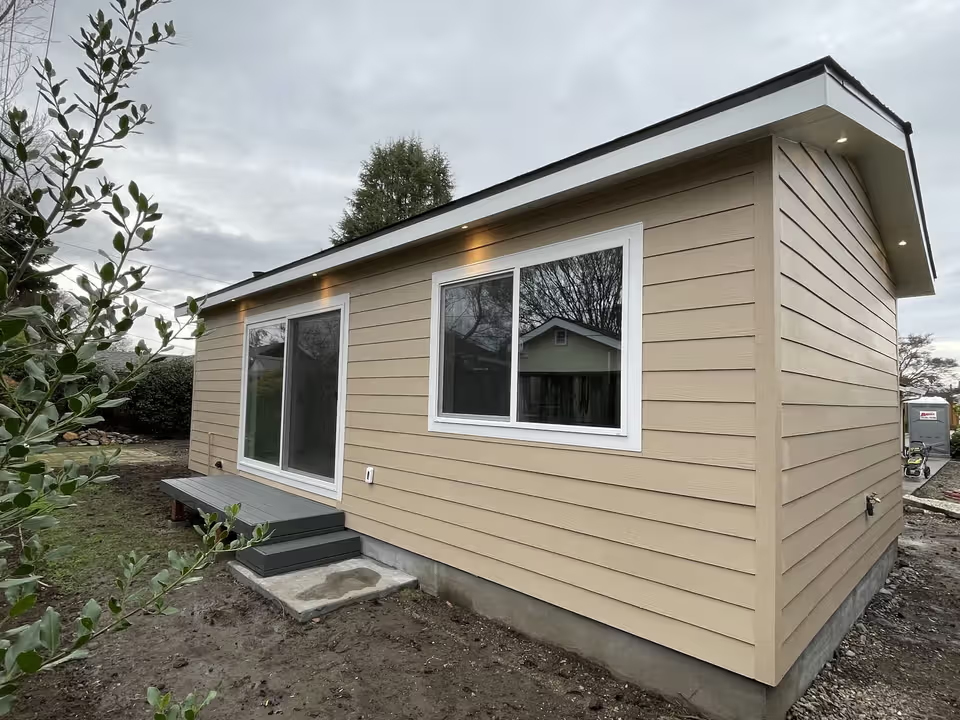
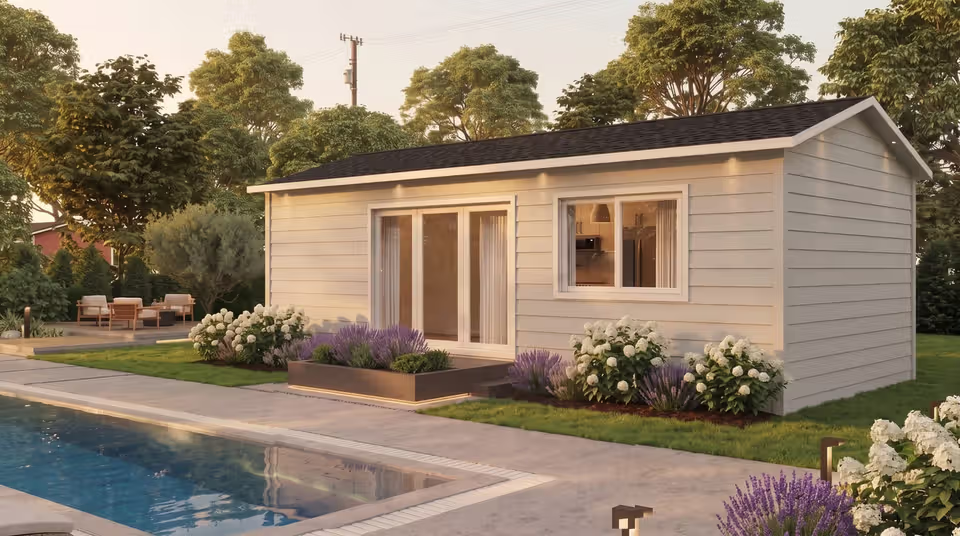
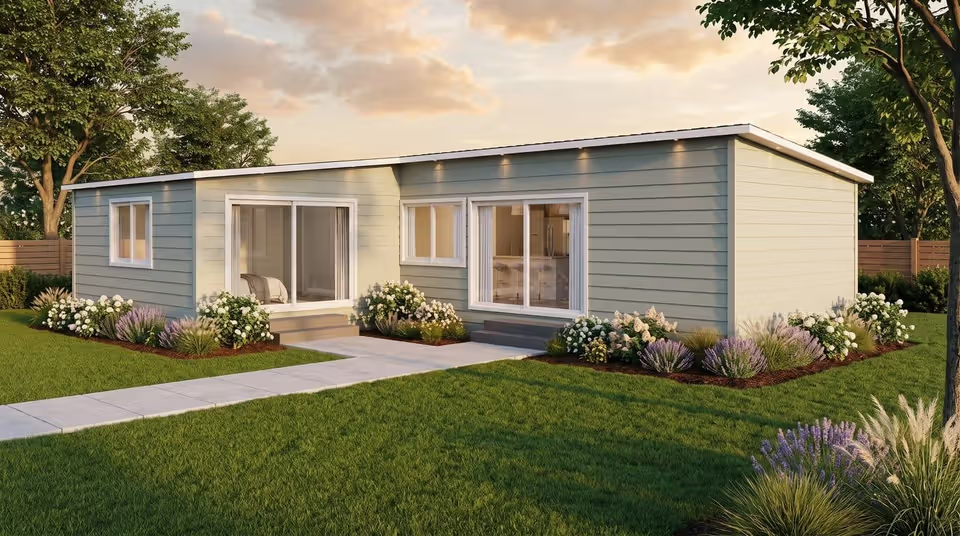
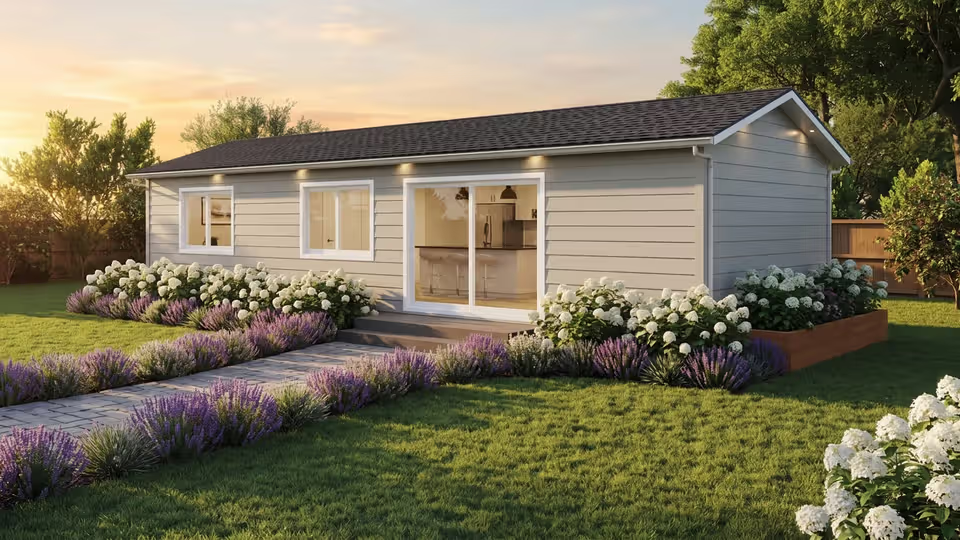
If you want two homes on the lot, plan them as one project. Both applications go in together, and the main house sets the pace for occupancy. Both homes can come out of our Salinas factory. A family might pair the 1,200 square foot Twelve Hundred as the main house with the 450 square foot Four Fifty as the ADU. While the foundations are prepared on site, the homes are built about 97% off-site, then crane-delivered.
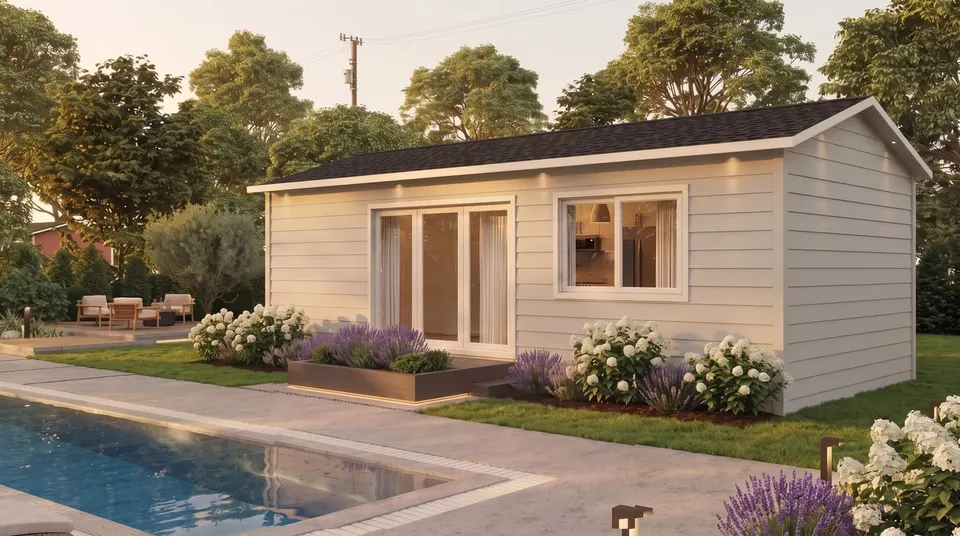
Timing matters. Because the ADU can’t be occupied first, the project moves at the speed of the main house. Pair a factory-built ADU with a site-built custom house, which commonly takes 16 to 24 months, and the ADU can sit finished long before anyone may live in it. Our Twelve Hundred models typically run 7 to 9 months and our Four Fifty about 4 months at best, with permitting as the one step nobody fully controls.
Path 2: build a small primary home first
Many people asking whether they can build an ADU first really mean: can I build something smaller now, live in it, and add the bigger house later? That often has a better answer, just not under the ADU label. A home of the same size and quality can be permitted as the primary dwelling itself, with its own certificate of occupancy.
What changes is the permit path. A primary home goes through standard residential permitting instead of the ministerial ADU track, and some cities add design review for new primary homes. Details are in our guide on whether a prefab ADU can be a primary home, and our primary homes page shows the models families most often choose.
Whether that small home can later be re-designated as the ADU when a larger main house goes in varies by jurisdiction, so we confirm it in the feasibility study instead of guessing. Where a city or county has no compliant ADU ordinance of its own, state law sets a 1,200 square foot maximum for a new detached ADU (section 66314). Local ordinances set their own maximums, which can be lower or higher. Our 14 models run 405 to 1,200 square feet, so whether your home would fit a local ADU size limit later is one more thing the study checks.
Utilities, fees and financing on an empty lot
On an empty lot, water, sewer or septic, and electrical service all have to be brought to the property, as we explain in building a home on a vacant lot in California.
Building both homes at once can also change utility fees. Under Government Code section 66311.5, an ADU normally isn’t treated as a new residential use when a water or sewer provider calculates connection fees or capacity charges, but that protection doesn’t apply when the ADU is built with a new single-family home. Even on its own, a new detached ADU can be charged a connection fee scaled to its size or plumbing fixtures. Impact fees follow a separate rule: cities, counties, special districts and water providers can’t charge impact fees on an ADU of 750 square feet or less, and above that the fee is scaled to the ADU’s size compared with the main house. School districts can still charge their own fees on an ADU over 500 square feet. The new main house pays your city’s or county’s fees for a new home. All of these are parcel-specific and confirmed in your feasibility study.
Financing differs too. With no existing house, there’s no home equity to borrow against, so empty-lot projects usually lean on construction-style loans, covered in financing an ADU on an empty lot. Framework First isn’t a lender, but an all-inclusive scope gives a lender something concrete to review.
Living on the property while you build
Because of the occupancy rule, the ADU usually can’t be your temporary home while the main house goes up. Whether you can live on the land another way during construction, such as a temporary dwelling under a separate permit, varies by jurisdiction, so we check it rather than promise it.
This is where the small-primary-home path shines: build the smaller home first, move in, and plan the next phase from your own front porch. Because the home is built in our factory, the work on your lot is mostly the foundation, utility connections, crane day and finish work.
How the Empty Lot Feasibility Study answers this for your parcel
Our Empty Lot Feasibility Study is $997, takes 21 business days, and includes everything in the standard study plus a raw-land buildability assessment. For a “which home comes first” question, it covers:
- Zoning: whether the lot allows a primary home, an ADU, or both
- Permit path: how your city or county handles an ADU with a proposed main house, and whether a small primary home could later become the ADU
- Utilities: how water, sewer or septic, and power reach the lot
- Access and grading: whether a delivery truck and crane can safely reach the build site
- Model fit: which of our 14 models fit as the main house, the ADU, or both
- Costs: permit cost projections and site-development cost considerations, in a written report
If we find your property can’t host an ADU, you receive a full refund minus payment processing fees. If you sign with us within 90 days, the fee is credited toward your build. Every Framework First home is priced all-inclusive, from $199,000 to $599,000, with a permitting budget, plans, foundation, factory build, delivery, hookups, appliances and inspections built in. Actual permit costs, and any extra site work an empty lot needs, are confirmed for your parcel in the study.
Frequently asked questions
Can I live in my ADU while I build my main house?
Usually not. Government Code section 66328 bars a certificate of occupancy for an ADU before the main house has its own. The only exception covers a detached ADU in a county under a Governor’s state of emergency proclaimed on or after February 1, 2025, where the main house was substantially damaged or destroyed. The workaround is a small primary home first.
Can an ADU be the only home on a lot?
Not as an ADU. By definition, an ADU sits on a lot with a proposed or existing primary home. The same home can be permitted as the primary dwelling itself, though, which is how families build one of our models as their only home.
Can I build the ADU now and the main house years later?
It depends on your jurisdiction. Some, like the County of Santa Cruz, allow the two to be built at the same time or one after the other. Even then, the ADU can’t be occupied until the main house has its certificate of occupancy, and permit expiration rules vary by jurisdiction. For most families, a small primary home now and a larger home later is the more livable plan.
Does building both at once change my utility fees?
It can. State law normally keeps an ADU from counting as a new residential use for water and sewer connection fees, but that protection doesn’t apply when the ADU is built with a new single-family home. Your exact fees vary by parcel and provider and are confirmed in the feasibility study.
Can Framework First build a primary home on my empty lot?
Yes, if your lot is in our service area: Monterey, Santa Cruz, San Benito and Santa Clara counties, with San Luis Obispo County considered case by case. All 14 of our models, from 405 to 1,200 square feet, can be built as a primary home, factory-built in Salinas and crane-delivered to your lot. Start with a free Online Property Analysis with our team, and the Empty Lot Feasibility Study then confirms zoning, utilities and access before you choose a model.
Own an empty lot in Monterey, Santa Cruz, San Benito or Santa Clara County and wondering which home should come first? Book a free Online Property Analysis and our team will walk you through your options. From there, an Empty Lot Feasibility Study confirms the path your parcel allows. You can also explore primary homes and the full lineup of models.