ADU Questions · 2026
ADU in a Fire Hazard Severity Zone: California Rules

In most cases, yes. A fire hazard severity zone on its own does not take away your right to an ADU. The state’s ADU Handbook says the fire maps are meant to guide building materials and defensible space, not to restrict housing. A city that limits ADUs for public safety has to back it with findings, and it still has to allow the ADU types state law protects. What it changes is how the home is built and how the land around it is kept: ignition-resistant construction under the state’s Wildland-Urban Interface Code, defensible space clearance, and a five-foot ember-resistant “Zone 0” that is close to taking effect. In some cities, it can also rule out the fastest permit lanes.
The short version: Look up your parcel on the State Fire Marshal’s fire hazard map first. If it sits in a mapped zone, plan for ember-resistant construction (roof, vents, siding, windows, decks), defensible space around the home, and a plan review that checks both. Fire sprinklers are still only required if your main house needs them. We confirm all of it for your address in the feasibility study.
On this page
How to check your fire hazard severity zone
The Office of the State Fire Marshal, part of CAL FIRE, classifies land into three Fire Hazard Severity Zones: Moderate, High and Very High. You can search your address on the map viewer linked from its Fire Hazard Severity Zones page. Two terms help:
- State or local responsibility. The State Responsibility Area (SRA) is mostly unincorporated land where the state handles wildfire protection, and every acre of it carries one of the three ratings. The Local Responsibility Area (LRA) covers cities and other areas protected by local government. The State Fire Marshal sent new LRA maps to cities and counties in early 2025, and each local government adopts its own, so your building department confirms the zone for your lot.
- Hazard is not risk. The maps measure hazard: the vegetation, terrain, fire history, embers and weather that shape likely fire behavior over 30 to 50 years. They do not account for home hardening or defensible space, which lower risk, and that is what the rules below are for.
Embers travel on the wind, so zones also reach neighborhoods near the edge of wildland. If your property is in the hills or backs onto open space, as many do in the Santa Cruz Mountains, the foothills above Los Gatos and Saratoga, and Carmel Valley, look it up before you choose a floor plan.
What a zone changes in construction
California’s wildfire building standards used to live in Chapter 7A of the California Building Code. Since January 1, 2026, they sit in the California Wildland-Urban Interface Code (Title 24, Part 7). It applies to new residential buildings anywhere in the SRA, in High and Very High zones in the LRA, and in areas a city or county designates as wildland-urban interface. A new detached ADU is a new residential building, so in a covered zone it is built to this code like any new house.
The code targets the ways embers and flames get into a building. Your building department sets the details, but this is the usual checklist:
| Part of the home | What the code looks at |
|---|---|
| Roof | A Class A fire-rated roof assembly, with gaps under the covering protected from embers |
| Vents | Attic, eave and underfloor vents built to resist ember and flame intrusion |
| Exterior walls | Coverings that are noncombustible, ignition-resistant or part of a fire-rated wall |
| Eaves | Protected undersides on open eaves |
| Windows and glass doors | Multi-pane glazing with at least one tempered pane, or another approved option |
| Decks and stairs | Decking that meets the code’s ignition-resistance standards |
The code can also reach additions and exterior alterations, so an attached ADU, or a conversion that changes the outside of the building, may need the same ember-resistant details. Santa Cruz County, for example, applies it to new structures, additions and exterior alterations in mapped zones. Your building department confirms what applies to your project.
Defensible space and Zone 0
Defensible space. In the SRA, Public Resources Code 4291 requires 100 feet of defensible space around each structure, but not beyond your property line. In Very High zones in the LRA, Government Code 51182 sets the same 100 feet (State Fire Marshal) unless a local rule is stricter. CAL FIRE’s defensible space guide breaks it into three zones:
- Zone 0, the first 5 feet: ember-resistant. Gravel, pavers or concrete, no bark or wood mulch, no dead plants or debris.
- Zone 1, 5 to 30 feet: lean, clean and green. Dead plants removed, space between trees and shrubs.
- Zone 2, 30 to 100 feet: reduced fuel. Annual grass cut to 4 inches or less, shrubs and trees spaced apart.
The law applies to each structure, so your ADU needs its own clearance.
Where Zone 0 stands. State law calls for an ember-resistant zone within 5 feet of structures and leaves the details to the Board of Forestry and Fire Protection, which adopted its Zone 0 regulations on August 19, 2026. As of early November 2026, the Board’s Zone 0 page says the package is still in final review with the Office of Administrative Law, so the rules are not in effect yet. Once they are, they apply immediately to new building permits in the SRA and in Very High zones in the LRA, with up to five years for existing homes.
That matters for an ADU, because a structure counts as new when its permit application is submitted after the effective date. If yours lands after that date, plan Zone 0 from day one: a noncombustible strip against the building (1 foot or out to the edge of the eaves, whichever is greater; 2 feet at windows, glass doors and vents; 5 feet around attached decks and stairs, per the Board’s 2026 Zone 0 guidance), with only low, well-kept plants out to 5 feet. Done during design, it is a landscaping choice, not a retrofit.
Permits in a fire zone
The permit path is the same ministerial ADU process as anywhere in California: a decision within 60 days of a complete application, no public hearing. A zone adds review content and, sometimes, a slower lane:
- Plan check covers the wildfire code. The building department, often with the local fire authority, checks the roof, vent, siding, glazing and decking details.
- Fire access and water. In the SRA and in Very High zones in the LRA, the Board of Forestry’s Fire Safe Regulations address emergency access, address signage and firefighting water supply. How they apply to an ADU on an existing lot depends on the project, so we confirm it with your fire authority early.
- Sprinklers. A fire zone does not change the state rule: an ADU needs sprinklers only if the primary home is required to have them, and building the ADU cannot trigger sprinklers in your existing house. Details in Do ADUs need fire sprinklers?
- Fast-track programs can exclude fire zones. San Jose’s same-day preapproved ADU permits are only for lots outside geohazard, landslide, flood and Wildland-Urban Interface areas. Unincorporated Santa Clara County’s Pre-Approved ADU Program offers no expedited permitting for properties in the Wildland Urban Interface, special flood hazard or geologic hazard zones. Those lots still get permits through standard review. More in our Santa Clara County ADU regulations guide.
Slope is a factor in the fire hazard model, so fire-zone parcels are often hillside parcels too. See our guide to building an ADU on a sloped lot.
Insurance in a fire zone
The State Fire Marshal notes that insurers use their own risk models rather than the hazard maps, though much of the same data likely feeds both. Two points matter for an ADU:
- Mitigation earns discounts. The California Department of Insurance’s Safer from Wildfires regulation requires insurers to give wildfire safety discounts for steps such as a Class A roof, a 5-foot ember-resistant zone, ember-resistant vents, multi-pane windows, enclosed eaves and defensible space, many of which a new building in a zone already needs.
- Placement matters. The same list credits keeping combustible outbuildings at least 30 feet from the home, and it names ADUs among them. Ask your agent how an ADU near your house will be treated before you lock in the site plan.
Our ADU insurance guide covers updating your policy once the ADU is built.
How a factory-built ADU fits a fire zone
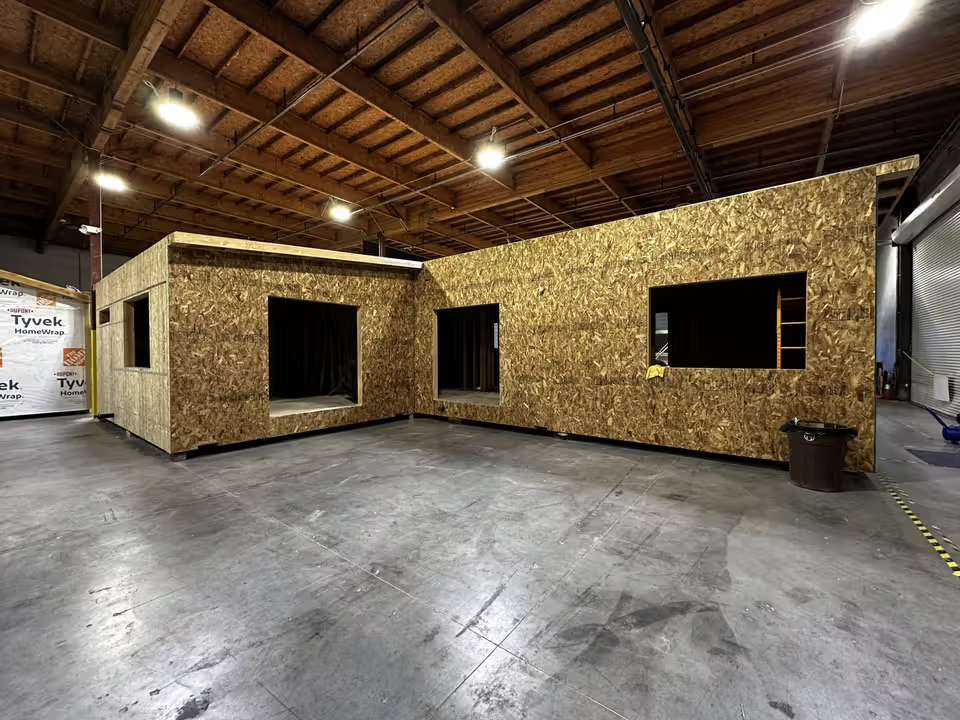
Every Framework First home is built about 97% in our Salinas factory and crane-delivered to your foundation. In a fire zone, we build to the code that applies to your parcel, so the wildfire requirements are part of your plans from the start. Our standard materials are on the specifications page.
Because we run the whole project, from permits to appliances, we flag the zone in your feasibility study, design the site plan around defensible space and Zone 0, and coordinate review with the building department and fire authority. Our all-inclusive pricing has a permitting budget built in, and costs specific to a fire-zone parcel vary by property and are confirmed for your address before you sign. Our 14 models run from 405 to 1,200 square feet, $199K to $599K all-inclusive.
Frequently asked questions
Can I build an ADU in a very high fire hazard severity zone?
Usually, yes. State ADU law still applies, so a Very High rating typically adds requirements rather than ruling an ADU out: ignition-resistant construction, 100 feet of defensible space (or to your property line) and, once effective, Zone 0. Ask your city or county about any local fire-zone rules.
Does an ADU in a fire zone need fire sprinklers?
Only if the primary home is required to have them. That state rule is the same inside a fire zone.
What is Zone 0, the 5-foot rule?
Zone 0 is the first 5 feet around a building, the “ember-resistant zone.” The Board of Forestry adopted its rules in August 2026, and they were still in final state review as of early November 2026. Once effective, they apply right away to new building permits in the SRA and in Very High zones in the LRA.
Does a fire zone slow down my ADU permit?
It can. Plan review has more to check, and fast tracks in San Jose and unincorporated Santa Clara County leave out Wildland-Urban Interface lots. The 60-day clock for a complete application still applies. How much time a zone adds varies by parcel, which the feasibility study confirms.
How do I find out my fire zone?
Search your address on the State Fire Marshal’s Fire Hazard Severity Zone map viewer. Inside a city, also ask the building department, since local governments adopt the maps for their areas.
Have a hillside or wooded lot in mind? Start with a feasibility study ($497 for a standard lot, $997 for an empty lot) that checks your parcel for fire, flood and slope overlays, or browse ADU models to see what could fit.