Local Guides - Morgan Hill
How to Finance an ADU in Morgan Hill

Most Morgan Hill homeowners we talk to have never financed a construction project before, and the first question is always the same: how do we actually pay for this? The short answer is that you don’t need a specialized ADU lender. Homeowners here typically tap the equity they already have, through a HELOC, a cash-out refinance, or a construction loan, and use it to cover a fixed price with a permitting budget built in and far fewer surprise draws along the way.
The short version: we don’t lend money directly, but most Morgan Hill homeowners finance their ADU with a HELOC, a cash-out refinance, or a construction loan against their home’s equity. Because our price builds in a permitting budget from day one, there’s much less room for change orders or surprise draws, just one number covering the build from plans to move-in, with exact permit costs confirmed per property in your feasibility study.
On this page
Why Morgan Hill is a good fit for a financed, family-size ADU
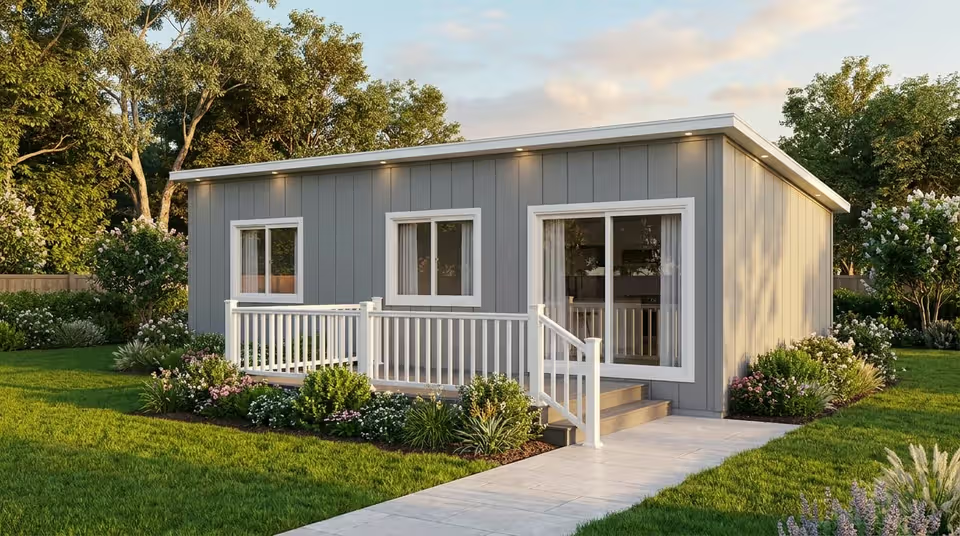
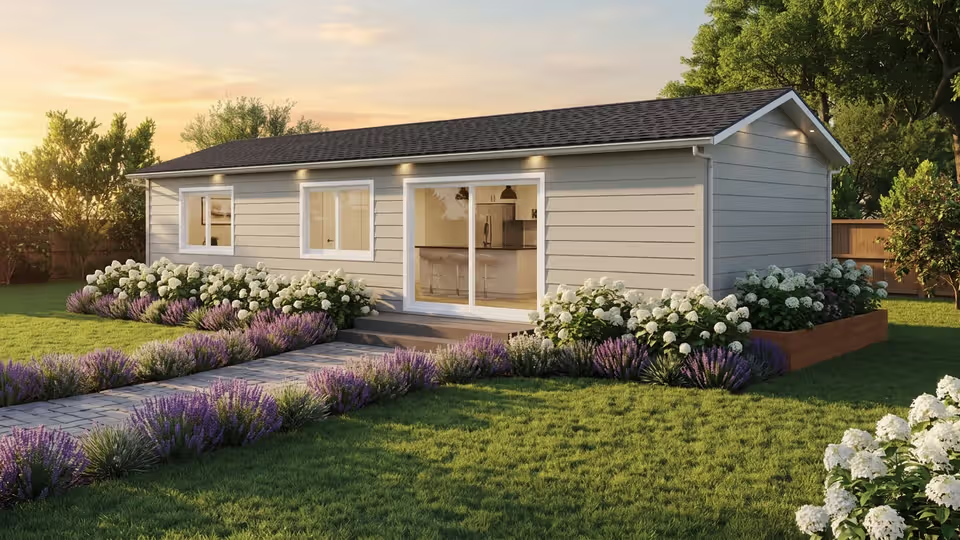
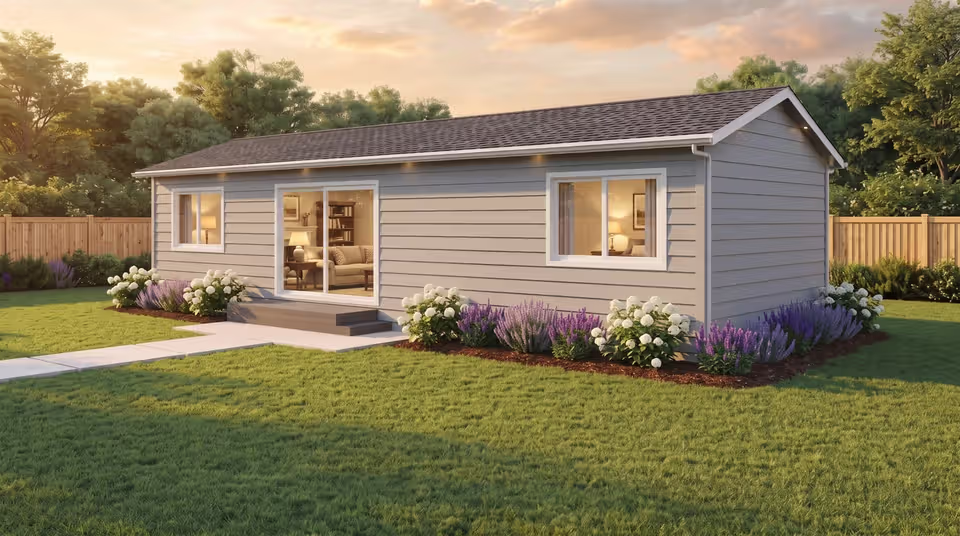
Morgan Hill’s larger lots give us room to place our bigger family-size models, and we’ve delivered two-bedroom and three-bedroom homes here for multigenerational families who wanted everyone under one roof without losing privacy. That matters for financing too. A bigger ADU means a bigger loan, so knowing your model and total cost upfront, before you talk to a lender, makes the whole process move faster. We’re about 40 minutes from our Salinas factory to Morgan Hill, close enough that site visits and delivery day aren’t a logistical headache, and we’ve already completed projects here, so we know how the local process works.
Under the Municipal Code and the statewide baseline that applies in Morgan Hill, the city has to allow at least an 800 square foot, 16 foot tall ADU with 4 foot side and rear setbacks, no matter what local standards say, and a detached ADU can go as large as 1,200 square feet. If you want the full rule set and how approvals actually move through the city, we cover that in ADU permits in Morgan Hill and ADU timeline in Morgan Hill.
The three common ways homeowners finance an ADU here
We don’t lend money directly, but we’ve watched enough Morgan Hill homeowners go through this to recognize the three paths that come up again and again.
A HELOC, or home equity line of credit, lets you borrow against the equity in your primary home and draw funds as you need them. Many homeowners like it because it’s flexible and often has lower upfront costs than a full refinance. A cash-out refinance replaces your existing mortgage with a new, larger one and hands you the difference in cash, which can make sense if current rates work in your favor. A construction loan is built specifically for a project like this, releasing funds in stages tied to progress, and it often converts to permanent financing once the ADU is finished.
Each option has real tradeoffs around rate, timing, and how it touches your existing mortgage, and that’s genuinely worth walking through in detail rather than skimming. We’ve written full breakdowns in How to Finance an ADU in California and HELOC vs Construction Loan for an ADU, plus a broader rundown of lender options in ADU Loans California.
Why our pricing makes the financing conversation simpler
One thing that trips people up with traditional construction is the string of change orders that show up mid-project, each one meaning another call to the lender or another dip into savings. Our pricing builds in a permitting budget, the factory build, delivery, crane set, and hookup to the appliances inside. Actual permit costs are set by your city and county, so they’re property-specific and get confirmed in your feasibility study, and property-specific site work like septic upgrades or retaining walls isn’t part of the listed price, though we offer it in-house as part of your contract. That still leaves far less room for the kind of surprise draw request that shows up three months in because a fixture or a foundation detail wasn’t priced correctly the first time, and a firm project cost is a much easier thing for a lender to underwrite than an open-ended one.
Impact fees follow state law here too. They’re waived entirely for any ADU under 750 square feet, and once you’re at 750 square feet or larger, fees have to be proportional to the size of your primary home. Six of our models, the Four Fifty, The 405, Five Five Five, Six Sixty, Six Sixty 2BR, and Seven Forty-Nine, stay under that 750 square foot line and skip local impact fees entirely, which is one more variable you don’t have to build into your loan amount.
What it costs to get started
Before you’re financing a full build, there are two smaller numbers worth knowing. The feasibility study is $497 for most lots, or $997 if the lot is empty with no existing structure on it, and that fee credits toward your build if you move forward. It’s only refundable if we determine your property genuinely can’t host an ADU. Once you’re ready to move forward, a $1,000 signup deposit holds your place in production, and it’s fully refundable if your financing falls through. Neither number commits you to a loan you haven’t secured yet.
Frequently asked questions
Do I need financing approved before I contact Framework First?
No. Most homeowners start with the feasibility study to confirm what they can build and get a real, fixed price with a permitting budget built in, then take that information to their lender. Knowing your exact model and total cost upfront makes the loan conversation faster, not slower.
Does Framework First offer financing directly?
We don’t lend directly. Homeowners in Morgan Hill commonly use a HELOC, a cash-out refinance, or a construction loan against their home equity, and we’re happy to point you toward lenders who work with ADU projects regularly.
What happens to my deposit if my loan doesn’t come through?
The $1,000 signup deposit is fully refundable if your financing falls through. It exists to hold your spot in our production schedule, not to lock you into a build you can’t pay for.
Will I owe impact fees on top of whatever I finance?
Only if your ADU is 750 square feet or larger. Under 750 square feet, impact fees are waived under state law, which is one reason models like the Six Sixty and Seven Forty-Nine are popular with homeowners watching their total financed amount closely.
Ready to see your numbers?
The best next step is a feasibility study, so you walk into any lender conversation knowing your exact model, your fixed price with the permitting budget built in, and what you’re financing. Contact us and we’ll walk you through it.
Free Tool
Morgan Hill ADU rules lookup →
Answer a few questions and get the ADU rules for your Morgan Hill property, cited to official sources.
Free Tool
Free Morgan Hill property report →
Type your address and see your lot, what fits on it, and the local rules in one report.
More on building here: ADUs in Morgan Hill · Santa Clara County ADU regulations