Buying Guide · 2026
Best ADU Builders in California: How to Choose One (2026)
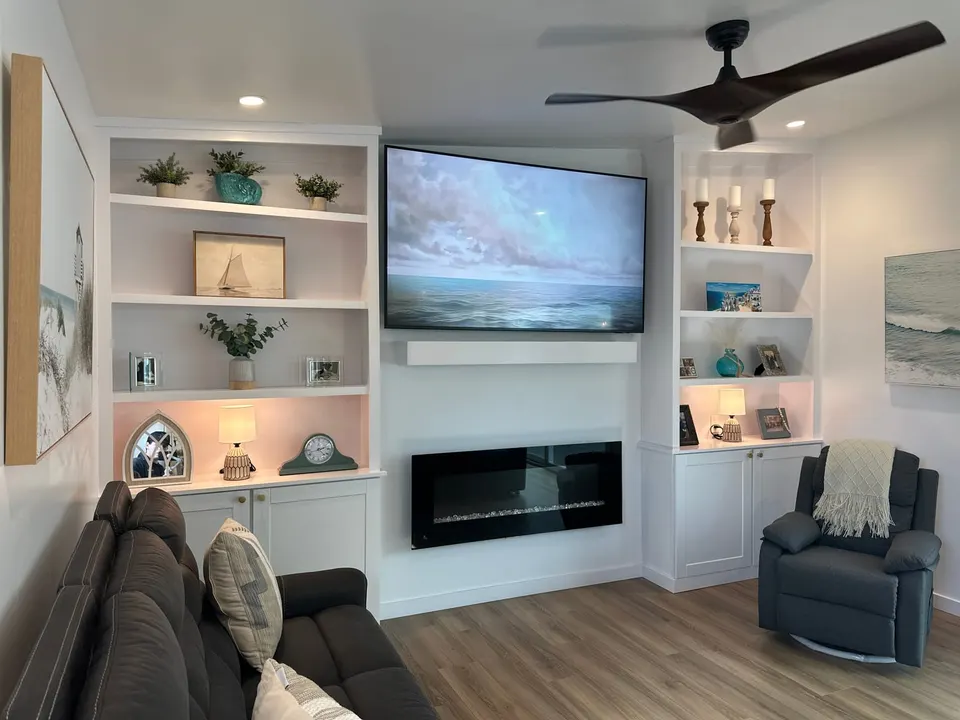
The best ADU builder in California for your project is the one that gives you a clear, all-in price, a realistic timeline with permitting accounted for, a license you can look up, and a finished home you can walk through before you sign. Then make sure they handle permitting and actually build in your county.
That sounds simple, but quotes are rarely laid out the same way, and the headline number on a website can mean very different things from one company to the next. This guide walks through what to compare, the questions to ask every builder you talk to, and the red flags worth walking away from. We’re a builder ourselves, so we’ll also tell you plainly where Framework First fits and where it doesn’t.
On this page
What to compare between ADU builders
All-in price vs. base price
Two quotes with the same headline number can end up far apart once you see what each one covers. Some builders quote a base price for the unit alone and bill plans, permitting, foundation, delivery and utility work separately. Others fold those into one project price. Ask each builder to put in writing:
- What the price covers: plans and engineering, permitting, foundation, the build itself, delivery, utility hookups, appliances and final inspection.
- What it leaves out for your property, such as septic work, a long utility trench or a retaining wall.
- How permit and impact fees are handled, since those are set by your city or county and vary by parcel.
Line those lists up side by side and the real difference between quotes shows. For real numbers by size, see how much an ADU costs in California.
Timeline, with permitting counted
Ask two questions about any timeline: when does the clock start, and what does it include? A schedule that starts after permits are approved can look shorter than one that starts earlier in the process. Permitting is the one step no builder fully controls, because review times vary by city and county, so a realistic timeline names it rather than hiding it. Factory-built homes usually finish sooner than site-built ones, and a custom site-built ADU commonly takes 16 to 24 months. Our full breakdown is in how long it takes to build an ADU.
A license you can verify
Ask every builder for its license number in writing, and ask which state agency issued it. Then look it up with that agency yourself, and make sure the name on the license matches the company on your contract.
A finished home you can walk through
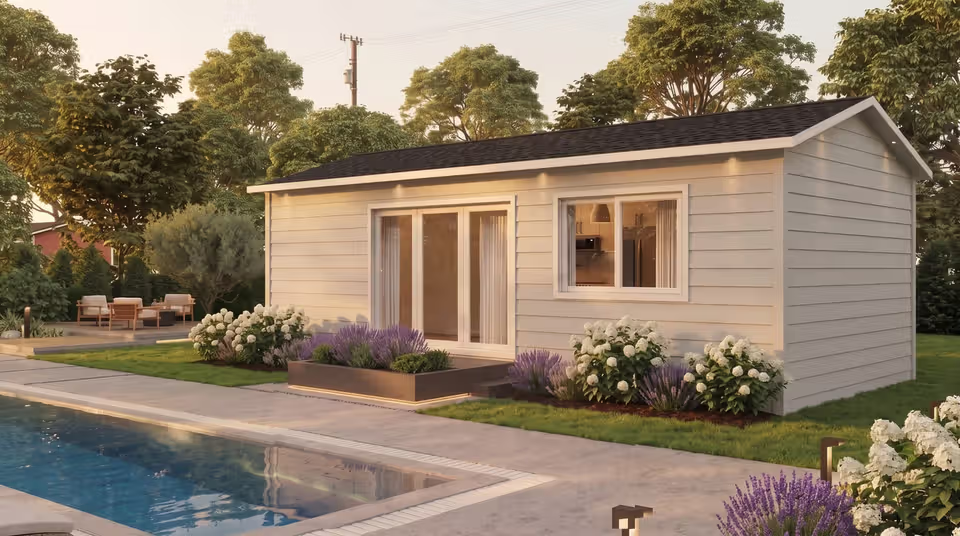
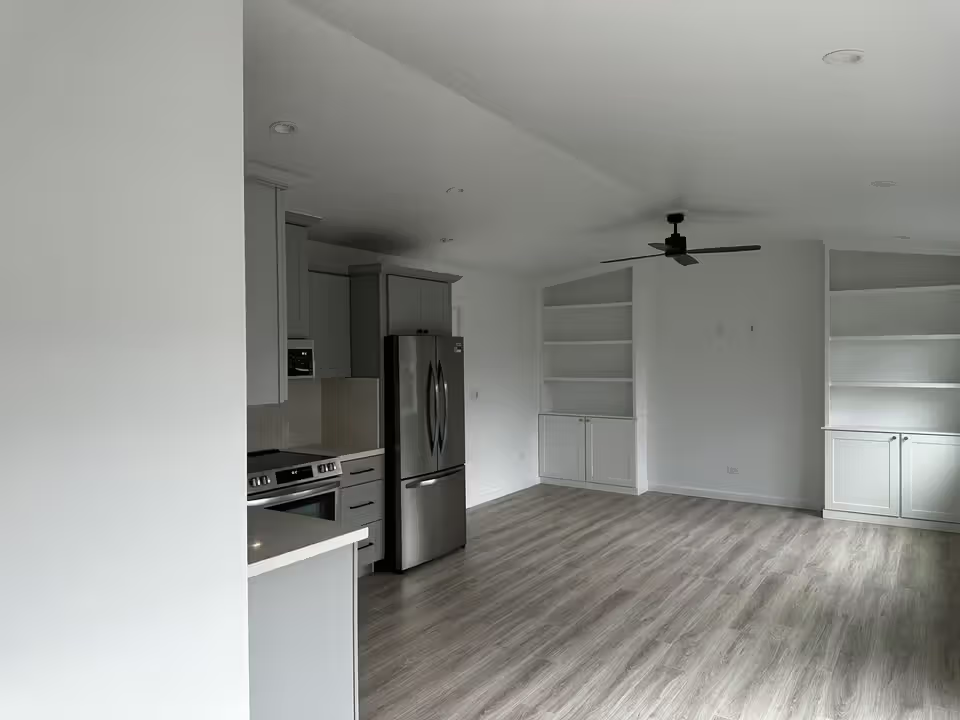
Photos and renderings only show so much. Ask to tour a finished home or the place where the homes are built, and look at the framing, windows, cabinets and finish details up close. A builder that’s proud of its work will make that easy. Our guide to whether prefab ADUs are good quality covers what to look for on a tour.
Who handles design and permitting
Every ADU needs a complete plan set for permitting, and someone has to submit it, answer plan-check corrections and schedule inspections. Some builders do all of that in-house. Others expect you to hire an architect or designer and coordinate the paperwork yourself. Neither is wrong, but it changes how much of the project lands on your plate. See do you need an architect for an ADU for how each path works.
Whether they build in your county
When you search for ADU companies near you, check where each builder actually works, not just where it advertises. A builder that regularly works with your city’s building department knows what its plan checkers ask for, and delivery, inspections and follow-up visits are simpler when your property sits inside its normal service area. Our city guides cover local rules for the communities we serve. For how factory builders serve this part of the state, see prefab ADUs in Northern California and the Bay Area.
Questions to ask every ADU builder
Bring this list to every first conversation, and ask each builder the same questions so the answers line up:
- What exactly does your price include, and what might be added for my property?
- When does your timeline start, and how long does permitting usually take in my city?
- What is your license number, and which state agency issued it?
- Can I tour a finished home before I sign?
- Who prepares the plans and handles permit submittals and corrections?
- Do you build the home in a factory or on site, and how much of the work happens on my lot?
- Do you regularly build in my county?
- Can I see the full written scope and payment schedule before I sign?
- Where can I read reviews from homeowners who built with you?
Prefab and modular ADU builders vs. site-built contractors
ADU builders generally fall into two groups. Prefab and modular builders build most of the home off-site in a factory, then deliver it to your lot and set it on a permanent foundation. Site-built contractors frame and finish the home on your property, one trade after another.
The biggest practical difference is sequencing. With a factory builder, the home can be built while permitting and the foundation move forward, so much of the waiting overlaps. A site-built ADU follows a linear sequence and commonly takes 16 to 24 months. Factory builders usually offer a lineup of proven models you configure, while a custom site-built contractor can design something one of a kind or work on a site a crane can’t reach.
A modular home is not a manufactured or mobile home. Ours are built to California residential building code and permanently set on a foundation, the same as a site-built home. What is a prefab ADU explains the difference, and prefab vs. site-built ADU compares cost, timeline and disruption side by side.
Red flags when choosing an ADU builder
- No license number in writing, or a builder who can’t tell you which state agency issued it.
- No written scope. A price with no list of what it covers can’t be compared to anything.
- A base price with the big items left vague. If permitting, foundation and utility work are “to be determined” with no plan for confirming them on your property, the real number is still unknown.
- A guaranteed move-in date before anyone has looked at your lot. Permitting depends on your city, and an honest builder says so.
- No finished home to see. If you can’t walk through real work, you’re buying on faith.
- Pressure to sign before your property has been checked. A good builder wants to know your lot can host an ADU before you commit.
Where Framework First fits
Framework First is a family-owned prefab ADU builder in Salinas, backed by 40+ years of building experience, and a state-licensed modular home manufacturer (MFG #1595931). About 97% of each home is built inside our Salinas factory with 2x6 exterior wall framing, then crane-delivered and finished on your lot, done for you from permits through final inspection.
- 14 models, $199,000 to $599,000 all-inclusive. Each price carries a permitting budget along with plans, foundation, the factory build, delivery, utility hookups, appliances and final inspection. Your actual permit costs are confirmed for your property in the feasibility study, and property-specific site work such as septic or retaining walls sits outside the listed price, handled by our team under the same contract. Browse them on our models page.
- Build timelines of about 4 to 9 months by model. About 4 months is best case for our smallest home, and our largest homes take 7 to 9 months. Timelines run from the day your construction deposit lands to final inspection. Local permitting time varies by jurisdiction and is confirmed in your feasibility study.
- Factory tours. You can walk through a finished home before you sign, and you’ll meet a member of our team, often Cathy, our CEO.
- About 4.9 stars on Google. Read what homeowners say on our reviews page.
- Service area. We build in Monterey, Santa Cruz, San Benito and Santa Clara counties, and take San Luis Obispo County projects case by case.
The feasibility study is $497 standard or $997 for an empty lot, credited toward your build if you sign within 90 days. If it turns out your property can’t host an ADU, we refund it in full, minus payment processing fees.
Where we’re not the fit: if you’re outside those counties, look for a builder that works in your area. And if you want a fully custom architectural design rather than a proven model in your chosen style, a custom local contractor is the better call. We’ll tell you that honestly in our first conversation.
Frequently asked questions
How do I choose an ADU builder in California?
Compare builders on four things: an all-in price in writing, a realistic timeline that accounts for permitting, a license you can verify, and a finished home you can tour. Then confirm who handles plans and permitting and that the builder regularly works in your county. Ask every builder the same questions so the answers line up.
What should an ADU builder’s price include?
A complete price should cover plans and engineering, permitting, foundation, the build, delivery, utility hookups, appliances and final inspection. Permit and impact fees are set by your city or county and vary by parcel, so ask how the builder budgets for them and when they are confirmed. Also ask what property-specific site work, such as septic or retaining walls, sits outside the price.
How do I check an ADU builder’s license in California?
Ask for the license number in writing and which agency issued it, then check it with that agency. A modular home manufacturer is licensed by the state housing department (HCD); a contractor is licensed separately. Make sure the name on the license matches the company on your contract. Ours is MFG #1595931.
Are prefab ADU builders faster than general contractors?
Usually, yes. A prefab or modular builder builds the home in a factory while permitting and foundation work move forward, so much of the schedule overlaps. A custom site-built ADU commonly takes 16 to 24 months because the work happens in sequence on your lot. Either way, permitting depends on your city, and no builder fully controls it.
How long should an ADU build take?
It depends on the size of the home, how it’s built and your city’s review time. Our build timelines run from about 4 months for our smallest home, best case, to 7 to 9 months for our largest, measured from the day your construction deposit lands to final inspection, with local permitting confirmed in the feasibility study. A custom site-built ADU commonly takes 16 to 24 months.
Which counties does Framework First build in?
We build in Monterey, Santa Cruz, San Benito and Santa Clara counties, and take projects in San Luis Obispo County case by case. Find your community in our city guides, or start with a free Online Property Analysis to see whether your property is a fit.
Want to see the numbers for a home you’d actually build? Design and price a home in The ADU Designer by Framework First, no sign-up needed, or book a free Online Property Analysis and our team will walk you through what fits your lot.