ADU Pricing · 2026
Cheapest Way to Build an ADU in California

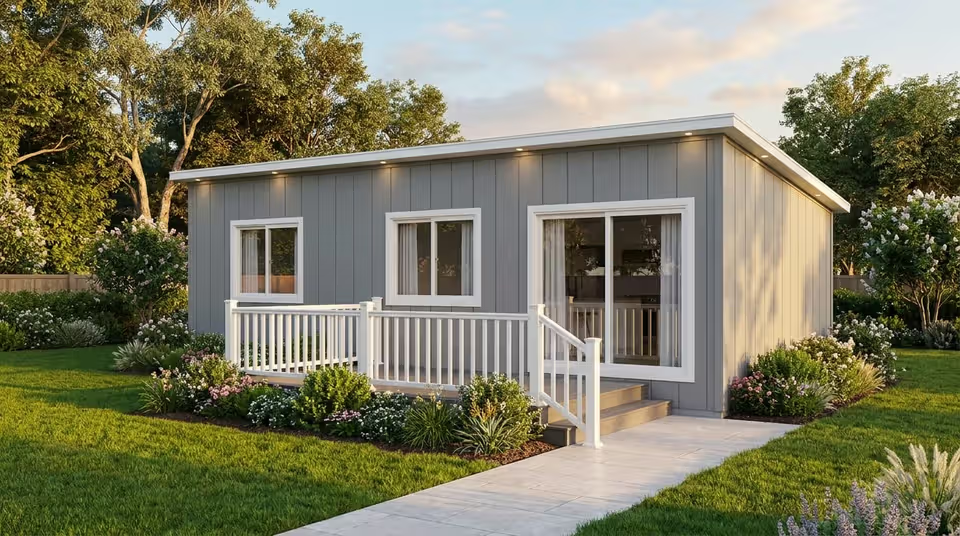
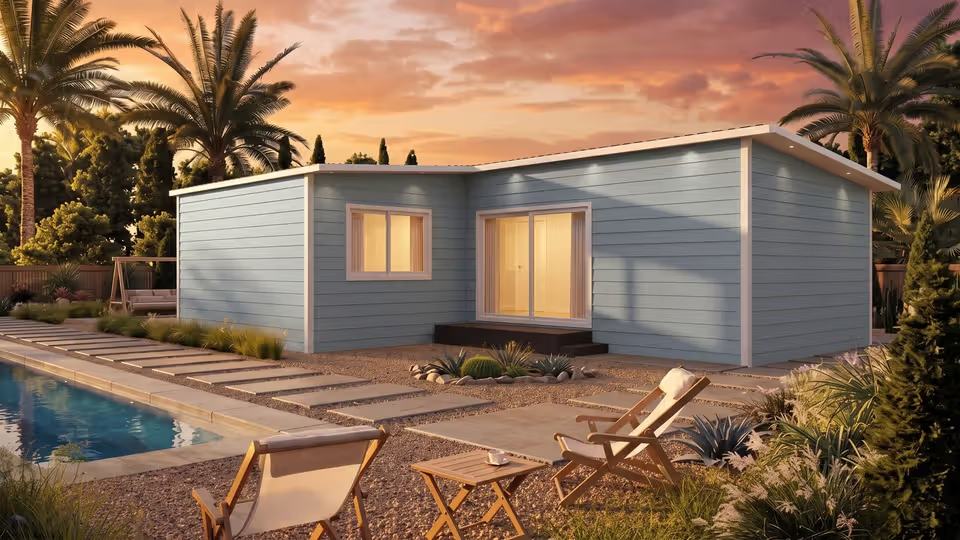
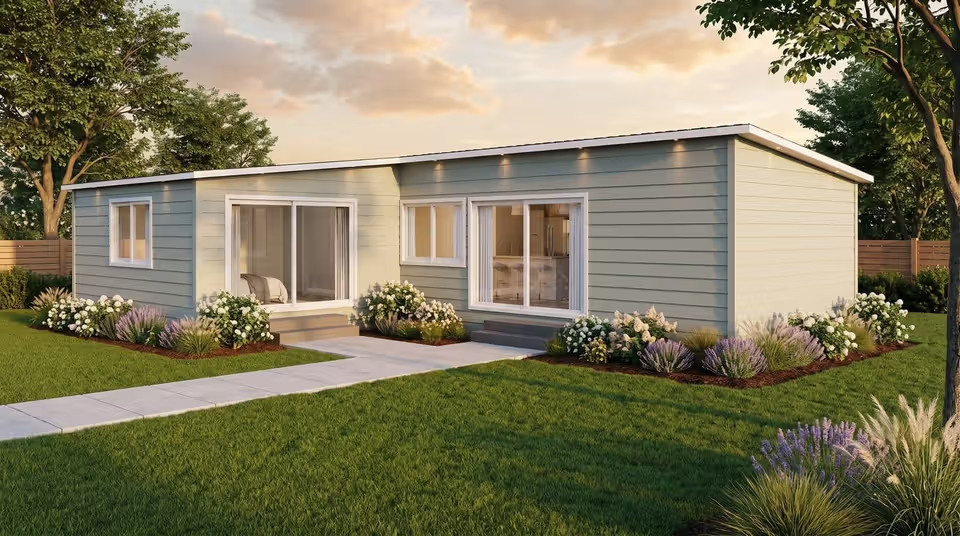
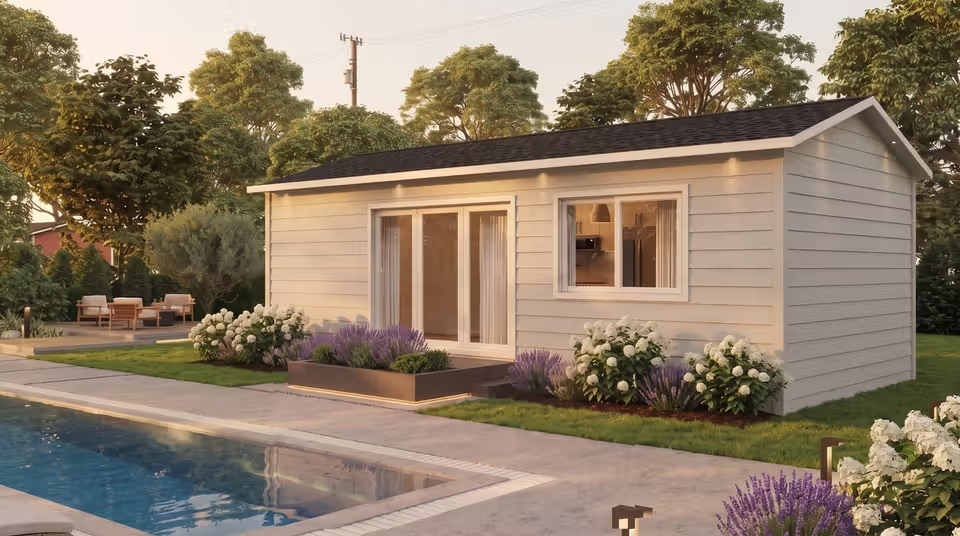
The cheapest way to build an ADU in California is usually to reuse space you already have: a junior ADU (JADU) inside your house, or a conversion of a sound garage, since both start with walls, a roof and utilities that already exist. For a brand-new detached home, which is what we build, the price comes down to size, site, utilities and build time. Our lowest-priced home, the Four Fifty, is $199,000 all-inclusive, with a permitting budget built in. Our full ADU cost guide breaks down every model and fee.
The short version: With a spare room or a sound garage, a JADU or conversion is usually the least expensive ADU. For a new detached home, size and site decide most of the price. State law bars local impact fees at 750 square feet of interior livable space or less (school districts follow separate rules above 500 square feet), and six of our 14 models come in under that line, starting with the Four Fifty at $199,000.
On this page
The least expensive ADU types, compared
Here are the four ADU types in the order they usually rank on cost:
| ADU type | What it is | Why it can cost less | What to watch for |
|---|---|---|---|
| JADU | Up to 500 sq ft inside your home, with an efficiency kitchen | Uses rooms and utilities you already have | Small. Rentals must run longer than 30 days, and if it shares a bathroom with the house, the owner must live on the property |
| Garage conversion | An existing garage or outbuilding turned into an ADU | The shell already stands, and the lost parking does not have to be replaced | Code upgrades for living space, such as slab, insulation and electrical work |
| Attached ADU | A new unit built onto your home | Shares a wall with the house | Crews work against your home for the whole build |
| Detached ADU | A new, separate home in your yard | Most private and flexible | New foundation, structure and utility runs, so it costs the most |
State law gives conversions two breaks. When an ADU or JADU is created within the existing space of a single-family home or accessory structure, your city, county or water and sewer provider cannot require a new separate connection or charge a related connection fee or capacity charge, unless the unit is built at the same time as a new single-family home. And when a garage or carport is converted, the city cannot require you to replace those parking spaces. Both rules are in California’s statewide ADU law.
We build detached, factory-built homes, not conversions. If you have a sound garage you don’t need, it may be your cheapest path; our garage conversion guide and JADU vs ADU comparison cover both options.
Lever 1: stay at 750 square feet or less
Size is one of the biggest drivers of a new home’s price, and California adds another reason to stay small. Under Government Code section 66311.5, no city, county, special district or water corporation can charge impact fees on an ADU with 750 square feet of interior livable space or less. Above that line, impact fees must be scaled to the ADU’s size compared with your main home; the state’s ADU Handbook gives the example of a 1,000 square foot ADU next to a 2,000 square foot home paying about half the fee for a new home.
The waiver does not cover building permit and plan check fees or utility connection charges, and school districts follow their own Education Code rules: they may charge ADUs over 500 square feet of interior livable space, so we confirm those fees for your address. Our guide to ADU impact fees has the details.
Six of our 14 models come in at 750 square feet or less:
| Model | Size | Beds / Baths | All-inclusive price* | Timeline** |
|---|---|---|---|---|
| Four Fifty | 450 sq ft | Studio / 1 bath | $199,000 | about 4 months |
| The 405 | 405 sq ft | 1 bed / 1 bath | $239,000 | about 5 months |
| Five Five Five | 555 sq ft | 1 bed / 1 bath | $279,000 | about 5 months |
| Six Sixty | 660 sq ft | 1 bed / 1 bath | $309,000 | about 5 months |
| Six Sixty Duo | 660 sq ft | 2 bed / 1 bath | $339,000 | about 5 months |
| Seven Forty-Nine | 749 sq ft | 2 bed / 1 bath | $369,000 | 5 to 6 months |
*Includes a permitting budget, not final permit costs. Permits and property-specific site work (septic, retaining walls and similar) vary by property, are priced separately, and are confirmed in your feasibility study. **Timelines depend on permitting, which no builder fully controls; 4 months is our best case for the smallest model.
The 405 is smaller than the Four Fifty yet priced higher; it has a separate bedroom, while the Four Fifty is an open studio. Decide early whether you truly need a bedroom with a door. Every floor plan is on our models page.
Lever 2: choose a footprint that fits your lot as it is
The least expensive site is one where nothing has to move. Demolition, retaining walls, tree removal and regrading all add cost before the home arrives, and a smaller footprint gives you more places to avoid them.
State law protects this kind of home, too. Cities and counties must ministerially approve one detached, new-construction ADU with four-foot side and rear setbacks on a single-family lot, and they may limit that guaranteed path to 800 square feet and the height limits in state law. A factory-built home also needs clear crane access, which our team checks on your property.
Lever 3: stay close to utilities and find hidden upgrades early
Every foot between your ADU and the existing water, sewer and electrical lines is trench, pipe and wire, so a spot near the house usually costs less than a far corner. If your provider requires a new, separate connection for a detached ADU, state law says the connection fee or capacity charge must be proportionate to the unit’s burden on the system. Our utility hookups guide explains when an ADU can share service.
Three items can change a budget:
- Electrical panel. A load calculation shows whether your panel has room for a second home or needs an upgrade or subpanel.
- Sewer lateral. An older line to the street may need repair before a second home ties in.
- Septic. County environmental health reviews whether the system can handle the added flow, and some systems need to be expanded.
Costs also vary by city across our area; see our cost guides for Salinas, Monterey, Santa Cruz and San Jose.
Find these before you sign. That is what the feasibility study is for: our team checks zoning, setbacks, utilities and site conditions for your parcel. It is $497 for a standard lot or $997 for an empty lot, refunded in full minus payment processing fees if your property cannot host an ADU, and credited toward your build if you sign with us within 90 days.
Lever 4: factory-built vs site-built (time is money)
A factory build changes the math mostly through time. About 97% of each Framework First home is built in our Salinas factory while your foundation and site work happen in parallel, and the whole project is done-for-you, from plans and permits to crane delivery and final inspection. Our models run 4 to 9 months depending on the model, with 4 months as the best case for the Four Fifty, and every timeline depends on permitting. A traditional site-built ADU typically takes 16 to 24 months.
An ADU earns rent, or saves you rent elsewhere, only once it is finished, and a shorter build means fewer months of financing costs first. A site-built bid can look lower on paper when it leaves out permits, site work or appliances, so compare totals with the same scope. Our prefab vs site-built comparison shows where each one wins.
Lever 5: pre-approved plans and grants
Every city and county had to set up a program for preapproving ADU plans by January 1, 2025, under Government Code section 65852.27. A detached ADU application that uses a preapproved plan, or one identical to a plan approved in the current building code cycle, must get a decision within 30 days of a complete application instead of the usual 60. That saves time, not necessarily money, since permit fees can stay the same. Our guide to pre-approved ADU plans in California explains how these programs work.
The statewide CalHFA ADU Grant Program once reimbursed up to $40,000 in pre-development and non-recurring closing costs for income-qualified homeowners. CalHFA’s ADU Grant page says its latest round was fully allocated on December 28, 2023, and lists no newer round as of November 2026. CalHFA also warns that anyone claiming they can get you this grant is running a scam, so budget without one. Our ADU grant guide has more.
What not to cut
Three things we never trim:
- Permits. An unpermitted unit can cause problems when you sell, refinance or insure, and fixing it later usually costs more.
- Foundation engineering. Soils and seismic design keep a home level and safe for decades.
- Energy code compliance. California’s energy code, Title 24 Part 6, sets the efficiency standards a new home must meet, and they keep monthly bills lower.
With 40+ years of building experience behind our team, we know these corners buy a lower number on day one and a more expensive home every year after.
Frequently asked questions
What is the least expensive type of ADU?
Usually a JADU, because it uses the walls, roof and utilities of your existing home. A sound garage conversion is often next. A new detached ADU costs more, but it gives you a brand-new, fully private home built for how you will use it.
What is Framework First’s lowest-priced model?
The Four Fifty, a 450 square foot studio with one full bathroom, at $199,000 all-inclusive with a permitting budget built in. Exact permit costs and site work depend on your property and are confirmed before you build.
How much does a 400 to 500 square foot ADU cost?
Our Four Fifty (450 sq ft studio) is $199,000 and The 405 (405 sq ft, one bedroom) is $239,000, both all-inclusive and under the 750 square foot impact fee line. Site work and final permit costs are confirmed in the feasibility study.
Do small ADUs pay impact fees in California?
Not from your city, county, special district or water corporation at 750 square feet of interior livable space or less, and not for JADUs up to 500 square feet. School districts follow the Education Code and may charge ADUs over 500 square feet of interior livable space, so the Four Fifty and The 405 sit under both lines. Larger ADUs can be charged impact fees scaled to the ADU’s size compared with your main home. Building permit fees and utility connection charges are separate and set locally.
Is a prefab ADU cheaper than a site-built one?
It can be, and much of the difference comes from time, because a factory build runs in parallel with your site work. Compare quotes with the same scope, since a bid that leaves out permits or site work looks lower than it is.
Are there grants that lower the cost of an ADU?
Not statewide right now. CalHFA’s ADU Grant page lists no new round since its funding was fully allocated on December 28, 2023. Ask your city or county about local programs, but budget without one.
Price your home in The ADU Designer by Framework First. Choose a model, layout and finishes and see what it costs, no sign-up needed, or compare all 14 homes on our pricing page. Then book a free Online Property Analysis with our team. We are a family-owned modular home builder in Salinas, serving Monterey, Santa Cruz, San Benito and Santa Clara counties.