ADU Process · 2026
What Is an ADU Feasibility Study, and Do You Need One?

An ADU feasibility study is a property-specific investigation that answers, before you pay for design or sign a build contract, whether your lot can host an ADU, what it will take to build there, and what the permit path looks like. It checks zoning, overlays, setbacks, sewer or septic, water and electrical service, and flags easements, slopes or tight access. You do not legally need one, but it is the least expensive point in the project to find a problem.
The short version: A feasibility study is a written, parcel-specific answer to “can I build here, and what will it take?” It is not a permit, a soils report or a design contract, and state law does not require it. Every Framework First project starts with a free 30-minute Online Property Analysis, and a paid study matters most when the lot has septic, a slope, an overlay, or no house on it yet.
On this page
What an ADU feasibility study is, and what it is not
Think of it as due diligence on your land, done before money goes into plans. State law allows ADUs on most residential lots (California’s housing department summarizes the rules in its ADU Handbook; see can I build an ADU on my property?), so the real question is whether this parcel has a problem the citywide rules don’t mention.
A good study is parcel-specific (your address, parcel number and recorded documents), written (a report you can share with your spouse, lender or CPA) and decision-ready (build as planned, build with changes, or stop).
It is not:
- A building permit. The city still reviews your actual plans.
- A soils report or a survey. A desktop soils review is not an on-site boring, and a placement concept is not a boundary survey. A good study tells you if you need either.
- A design contract. You are not committing to a floor plan, a builder or construction drawings.
What a feasibility study checks
| What gets checked | Why it matters |
|---|---|
| Jurisdiction | City or county sets the permit counter, fees and local ordinance |
| Zoning and overlays | Coastal, historic, fire hazard and flood zones can add a permit or design standards |
| Setbacks, lot coverage and height | Sets the buildable area and which model footprints fit |
| Sewer or septic | Septic may need a capacity review and a recent percolation test |
| Water and electrical service | Meter or well capacity, and whether the panel can support another home |
| Easements and recorded restrictions | Some easements can’t be built over, and HOA rules need a read |
| Slope, soils and access | Foundation design, grading, and whether a truck and crane can reach the pad |
| Fees and permit path | Impact, school and utility connection fees, plus a realistic permit timeline |
Jurisdiction comes first. Pre-construction planning in Monterey County, for example, starts with one fork: is the parcel inside a city like Salinas or Marina, or in unincorporated land where the County of Monterey is the permitting agency? Our guide to ADU rules in unincorporated Monterey County covers that split.
Overlays add steps, not usually a “no.” California’s ADU law keeps the Coastal Act in force, but a coastal development permit for an ADU must be decided within 60 days of a complete application, with no public hearing required (Gov. Code §66329). Cities may also apply objective standards that protect properties on the California Register of Historical Resources (§66314). Flood zones come from the FEMA Flood Map Service Center and fire hazard zones from the State Fire Marshal (see our fire hazard severity zone guide). What each overlay means varies by parcel and is confirmed in the feasibility study. See can I build an ADU in a coastal zone?
Sewer and septic are where many lots get complicated. When an ADU connects to an onsite wastewater system, state law lets the local agency ask for a percolation test from the last five years, or ten if recertified (§66323). See our ADU septic guide.
Fees belong in the answer. State law bars impact fees on an ADU of 750 square feet or less, and fees on a larger ADU must be proportional to the main house (§66311.5). School and utility connection charges are separate, so the study projects them for your address.
Do you legally need one?
No. Nothing in state ADU law requires a feasibility study. The city needs a complete permit application with plans that meet its objective standards. It has 15 business days to tell you whether the application is complete, and it must approve or deny a complete application within 60 days when there is already a home on the lot (§66317).
That is also the catch. The city reviews what you submit. It does not scout your lot. Some builders skip a study and go straight to design, and on a flat lot with city sewer and no HOA, that can work out fine. The risk is everything else, like a sewer line under an easement, a septic system sized only for the main house, or a delivery route a crane can’t reach. Found after you have paid for plans, those cost money and months. A study finds them first.
Start free: the Online Property Analysis vs. a paid study
Every Framework First project starts with a free, 30-minute Online Property Analysis. An Account Manager pulls up your property on Google Earth and county records, checks setbacks, lot coverage, height limits and easements, then gives you a clear yes or no and the model footprints that fit.
The free call gives you a clear yes or no and the footprints that fit. The paid study adds the written paperwork on utilities, fees, overlays and the permit path that you, your lender and your CPA will want before you sign a build contract.
A paid study is worth it when:
- You are on septic or a well. Capacity questions need real research.
- The lot slopes or the side yard is tight. Both affect the foundation, grading and crane access.
- The parcel sits in the coastal zone or another overlay.
- There is no house yet. An empty lot needs utilities brought to it, and when a new main home and an ADU are submitted together, state law lets the city hold the ADU decision until it decides the main home. See building a home on a vacant lot.
- You want paperwork before you finance or sign anything.
What a feasibility study costs and how long it takes
Prices vary by provider, so compare scope, not just the fee. Here is ours:
| Study | Best for | Fee | Turnaround |
|---|---|---|---|
| Feasibility Study | A home with a yard | $497 | 14 business days |
| Empty Lot Feasibility Study | Raw or vacant land | $997 | 21 business days |
Our team reaches out within one to two business days of payment to confirm your property details and collect your latest property tax bill and any HOA documents. Two rules keep it fair:
- If we find your property cannot host an ADU, you can request a full refund, minus payment processing fees. We don’t want your money if we can’t be of service to you.
- If you build with us, the fee is credited toward your build when you sign within 90 days.
What you get at the end
The standard study ends in a written PDF report covering your county parcel records, zoning, setback and lot coverage analysis, sewer, water and electrical hookup feasibility, a permit cost and timeline projection for your city, a recommended model and style, and a preliminary site plan showing where the ADU would sit. The empty-lot study adds raw-land buildability, site access and grading, utility-to-lot extension and deeper permit-path research, and site-development cost considerations. Neither includes on-site geotechnical boring. Then we walk through it with you page by page and give you a clear go or no-go.
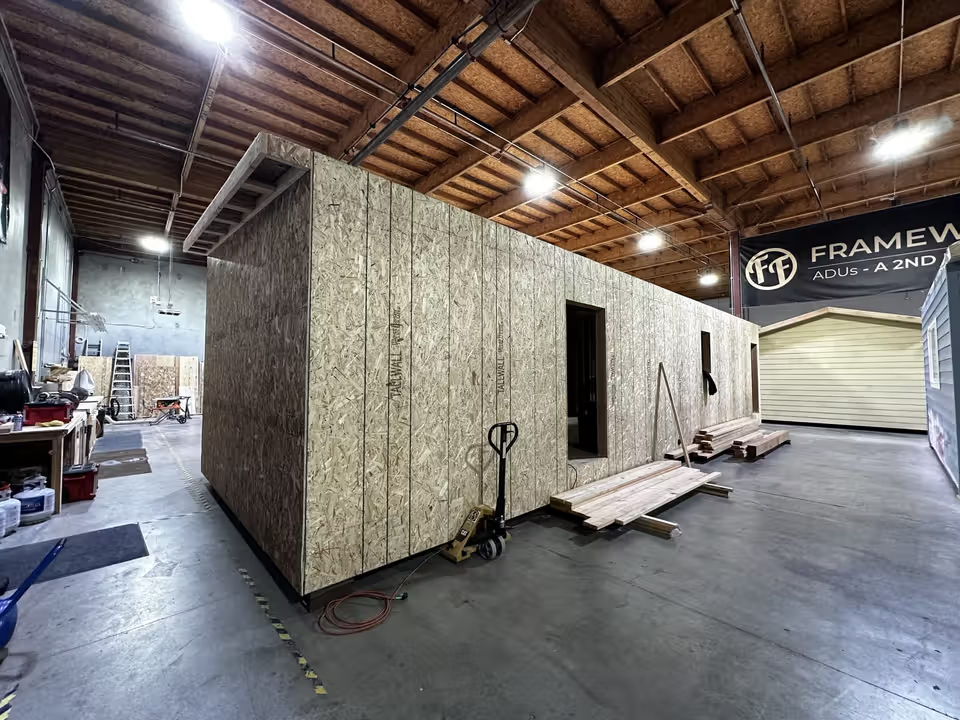
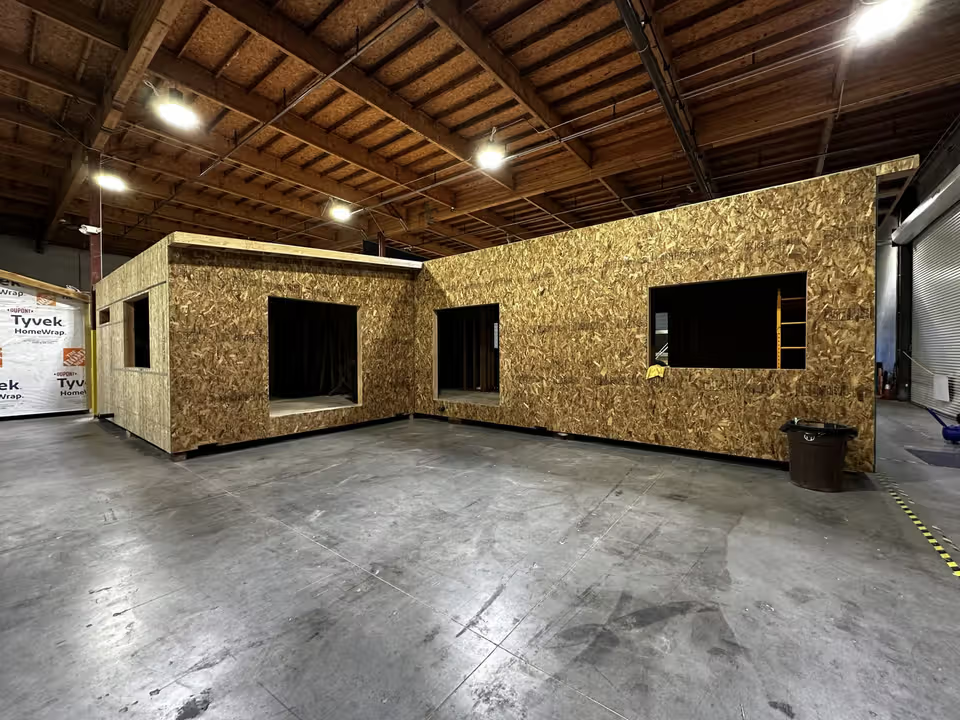
Framework First homes are about 97% built in our Salinas factory and delivered by crane, and all 14 models are already designed and engineered. Our all-inclusive price builds in a permitting budget along with plans, the foundation, appliances, crane delivery and installation. Actual permit costs and any property-specific site work, like a septic or panel upgrade, are set per property, and the study confirms them for your address before you sign.
Red flags when comparing feasibility studies
- No written report. A verbal “you’re fine” is an opinion, not due diligence.
- Citywide rules instead of your parcel. If it never mentions your easements or utilities, it is a brochure.
- Utilities or access skipped. Septic, water, the panel, the truck route and crane reach are where projects stall.
- Promises nobody can make. A study can project fees and timelines. No honest provider guarantees what a city will decide.
- No answer for “what if it’s a no?” Ask what happens to your fee if the lot can’t host an ADU.
- A design contract first. If you are asked to sign for plans before anyone has checked the lot, the order is backwards.
Frequently asked questions
Is a feasibility study required to get an ADU permit?
No. California’s ADU law does not require one. The city needs a complete application with plans that meet its objective standards. A study is optional due diligence that finds parcel problems before you pay for plans.
How long does an ADU feasibility study take?
Ours takes 14 business days for a property with an existing home and 21 business days for an empty lot. The free Online Property Analysis that comes first takes about 30 minutes.
How much does an ADU feasibility study cost in California?
Prices vary by provider and scope, so compare what is included. Ours is $497 for a home with a yard and $997 for an empty lot, and the fee is credited toward your build if you sign with us within 90 days. If the property cannot host an ADU, you can request a full refund, minus payment processing fees.
What happens if my property is not feasible?
You get a written explanation of what stands in the way. With us, if the property cannot host an ADU, you can request a full refund, minus payment processing fees.
Is the feasibility study the same as the free Online Property Analysis?
No. The Online Property Analysis is a free 30-minute call with a quick yes or no and which footprints fit. The feasibility study is a paid, written investigation into utilities, fees, overlays and the permit path. Every project starts with the free call, and our team tells you on it whether your lot needs a study.
Do you offer feasibility studies in San Francisco or the East Bay?
Framework First builds in Monterey, Santa Cruz, San Benito and Santa Clara counties, plus San Luis Obispo County case by case. San Francisco and the East Bay sit outside that area, so book the free Online Property Analysis or call (831) 432-7721 and we’ll get you to the right person to confirm whether we can help. The checklist above works for comparing Bay Area providers too.
Not sure where to start? Book a free Online Property Analysis for a straight answer in 30 minutes, or visit the feasibility study page if your lot needs a closer look.